It doesn't take long to realize that finding the right piece of property is the most important aspect of new home construction. In a development, restrictions and easements have already been sorted out, but if you are looking for a stand-alone piece of vacant land, you're on your own. With the move to Montana, we got a fast education on what tolook for and be aware of.Here are some of the factors you need to consider before spending your hard-earned cash on a pretty view that might be unbuildable.
THE PERC. No, we're not talking about coffee. But we are talking about percolate. If you are outside of a community, chances are that you will not be connected to city water and sewer; you will have to build a septic system for your own house. See that story or rather saga in another post here. The septic system will be designed by a local civil engineer and probably approved by the county, but before the engineer knows what kind of septic you need he'll have to take a Perc Test. They will dig a big hole in the ground, fill it with water, then clock how long it takes for the water to seep into the ground. If the water drains too fast, you have too much sand. If it drains too slow, you have too much clay (or probably rock). There is an acceptable tolerance, outside of which the perc fails. Any wise buyer will make the purchase of the land contingent on the perc. Don't assume that just because you have a big piece of land that it will perc somewhere; this is not necessarily the case. The cost of the test is usually paid by the buyer. However, a motivated seller will perc the land for you, or even offer an approved septic system. This is a big bonus, and adds peace of mind, but the land will be more expensive as a result. In the long run, it's worth the extra dollars to bypass this big hurdle. The septic system will be designed to accommodate the number of bedrooms in a house, and you cannot add any bedrooms without redesigning the system, again we found out and added another septic tank for bed and breakfast.
Once the land is perced, that hole is the spot where the septic will be installed. If it's in the front yard, you cannot change the location without doing another perc. Also remember that nothing can be built on top of your septic field, nor can you plant any trees there.
SETBACKS: This is the space between the property line and the building, defined by the township. Nothing can be constructed in the setback, including your driveway. Some townships require more than 100 feet of setback from the road; setbacks on the front and back perimeters are usually larger than those on the sides of your property. On your survey, a dotted line usually defines the setback, and the space inside is called the building envelope. If the footprint of your intended house and driveway is wider than the setbacks allow, you may have to apply for a variance, or change the orientation of the building.
EASEMENTS: Easements are the rights given to other named parties for public or private use of a stretch of your land. This may include a gas main that runs through your property, power lines, railroad tracks, water mains, or a strip leading to a land-locked neighbor (this strip would be the "flagpole" of a flag lot). This easement should be clearly delineated in the deed, although common usage has been known to claim precedence over perceived rights. If you're the one who requires this easement for a flag lot, make sure it is in writing before you purchase this land, or you might not be able to access it. Fortunately we have both good easements and neighbors so we can ride our horses pretty much anywhere here.
DEED RESTRICTIONS: These restrictions can be imposed by the former owner of the property, or the township depending on application. For instance, you might be limited as to what kind of house you can build; or what materials you can use. You might not be allowed to build a log home. Some restrictions limit the square footage of the house, or the use of the property. You may have to limit the height of your house, or even what type of fencing you can use. There might be a limit to the kind of livestock you can manage, or how many acres per horse. This has nothing to do with zoning, which is a separate issue.
MINIMUM ACREAGE: Townships have started battling urban scrawl by imposing minimum acreage on a building lot. Sometimes, the piece of land you are trying to buy is smaller than the minimum acreage. If the lot was subdivided before the law was passed, it is usually considered "grandfathered" and you should be able to build on it. Check with the authorities to be sure; you may have to obtain a variance to build on a "substandard" sized lot. Also, if you are purchasing a big piece of land with the assumption that you can subdivide later and sell off parcels, make
CLEAR TITLE: This is a b iggie... If there is a lien on a property due to non-payment of bills or taxes, the title will be considered clouded and you might not be able to obtain clear title to your piece of land. There may be disputes about boundary lines, or adverse possession if you have an unwelcome long-term squatter. In most cases, a thorough title search will uncover any irregularities, and the mortgage company will require that you purchase a one-time title insurance policy against any future issues.
WATER SOURCE: If you need to dig a well, consult with the local well driller. There's a pretty good chance that the driller will have a good idea about how deep he'll need to go. You will pay by the foot to drill a well, and it could add thousands to your budget. Ah, we love the well water...
In short, from our experience, when it comes to purchasing land, you must thoroughly investigate your property with the township, civil engineers, or land use lawyers, no one else is going to protect you. A cooperative township office will give you access to the public records relating to your piece of land; if it's been perced in the past, those records become public. They may already have a file about your lot and block number, and a trip to the township office may enlighten you if there have been problems in the past. At the very least, you should have an idea what you can and cannot do with your land, before you make that big commitment
Se afișează postările cu eticheta contabilitate. Afișați toate postările
Se afișează postările cu eticheta contabilitate. Afișați toate postările
marți, 1 februarie 2011
Virginia City - Get Out of Jail
Montana is a vast and varied state of mountains, canyons, river valleys, forests and caverns. It's the 4th largest state in the nation but with our popularion under 1 million, it's actually the sixth least-populated state. Ah... there is room to breathe and nowhere is the air fresher. Oh sure, there's history, good food, and a variety of places to stay, but the main attraction is the sheer beauty. It's a land where everything seems intensified, in super sharp focus, richer in color, more majestic, more peaceful, and somehow closer to the sky. One of the many reasons we located here
Happily for travelers who prefer to avoid crowds, there's plenty of elbow room. Montana may be the fourth largest state in area (145,550 square miles), but, at under a million people, it ranks 48th in population density.
Virginia City
We played hookey mid week since the past weekend was a house ful of guests to visit this much touted city n .Also, since the builder of the log home we call the Fish Creek House Bed and Breakfast, is based out of Virginia City, we decided to give this tour a go... especially so we could see it up close and in person . Great recommendation for guests
Virginia City was the birthplace of Montana and the cradle of much history for the state. Though it may be best known as the rough-and-ready mining camp where vigilantes organized to rid the country of road agents and murderers, it is important to our history for many other reasons as well.
Gold is the force which created Virginia City, Montana and which controlled its history and made it strategic during the Civil War. Virginia City was producing enough gold to win the Civil War for whoever could capture it.
We noticed on our map that the Continental Divide runs pretty well north and south between Helena and Butte. The Continental Divide is like the ridge on your roof, where the water flows down and away from the ridge to the two sides of your house. The Continental Divide separates the water shed of the east from the west so that if you pour a glass of water on the east side it runs into the Atlantic Ocean and if you pour the water on the west side it runs to the Pacific Ocean. The Continental Divide is west of Helena and goes south to east of Butte, but at Butte it does a west and then north hook, then over to Anaconda, then south like a well behaved Continental Divide should until it becomes the Idaho - Montana border. Then it stays on the border and goes northeast, then across the lower end of Yellowstone National Park. When Idaho and Montana became separate territories the dividing line (the present state border) was believed to be the Continental Divide. Your map will show you where the crazy Continental Divide really runs. North of Virginia City the Continental Divide runs east and west, then circles around and finally, south of Virginia City, it runs east and west again. Then you will go over the top and down into Virginia City, Montana, and are you in for a treat!
The very much alive ghost town, Virginia City, Montana, is frozen in time. It is a remarkably well preserved old west Victorian gold mining town just 20 miles west of Yellowstone National Park (90 miles by road). When the gold ran out, there was still enough left so that homes and businesses were occupied, but there was not enough wealth to remodel the buildings. So it froze, and now represents the whole Victorian era. It is a true and original Old West. It is a gem, held within an incredibly rich area of natural beauty, recreation and history. Adjacent to Virginia City is Nevada City, filled with buildings and artifacts that will impress you. For many years Virginia City, Montana was a Rebel town in Union territory.
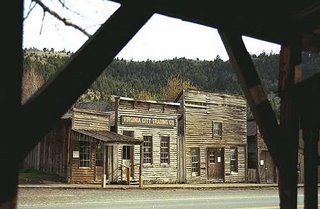 Back in 1865, merchants established the first businesses in Virginia City in wagons, tents, and wickiups (brush shacks) during the summer of 1863. Gold dust was the preferred medium of exchange, which was valued at $16 - $18/ounce.
 Of course what would a stop in Virginia City be without a stop at the brewery? And yes right next door is the opera house!!
In Old Town, we stopped off at Cousins Candy Shop The Virginia City shop has the original oak shelving and tin ceiling. Jars of the freshest candy are located in an old, covered chuck wagon pictured above. When we opened our shop in Old Town, we replicated the shelving and covered wagon exactly. Not only do we have great candy and a wonderful selection, Cousin's is just a fun place to visit with the entire family Of course the day wouldnt be complete without a stop at the Bale of Hay Saloon , an authentic wild west Saloon complete w/ Montana's best microbrews. Live music to to top off a great day
Happily for travelers who prefer to avoid crowds, there's plenty of elbow room. Montana may be the fourth largest state in area (145,550 square miles), but, at under a million people, it ranks 48th in population density.
Virginia City
We played hookey mid week since the past weekend was a house ful of guests to visit this much touted city n .Also, since the builder of the log home we call the Fish Creek House Bed and Breakfast, is based out of Virginia City, we decided to give this tour a go... especially so we could see it up close and in person . Great recommendation for guests
Virginia City was the birthplace of Montana and the cradle of much history for the state. Though it may be best known as the rough-and-ready mining camp where vigilantes organized to rid the country of road agents and murderers, it is important to our history for many other reasons as well.
Gold is the force which created Virginia City, Montana and which controlled its history and made it strategic during the Civil War. Virginia City was producing enough gold to win the Civil War for whoever could capture it.
We noticed on our map that the Continental Divide runs pretty well north and south between Helena and Butte. The Continental Divide is like the ridge on your roof, where the water flows down and away from the ridge to the two sides of your house. The Continental Divide separates the water shed of the east from the west so that if you pour a glass of water on the east side it runs into the Atlantic Ocean and if you pour the water on the west side it runs to the Pacific Ocean. The Continental Divide is west of Helena and goes south to east of Butte, but at Butte it does a west and then north hook, then over to Anaconda, then south like a well behaved Continental Divide should until it becomes the Idaho - Montana border. Then it stays on the border and goes northeast, then across the lower end of Yellowstone National Park. When Idaho and Montana became separate territories the dividing line (the present state border) was believed to be the Continental Divide. Your map will show you where the crazy Continental Divide really runs. North of Virginia City the Continental Divide runs east and west, then circles around and finally, south of Virginia City, it runs east and west again. Then you will go over the top and down into Virginia City, Montana, and are you in for a treat!
The very much alive ghost town, Virginia City, Montana, is frozen in time. It is a remarkably well preserved old west Victorian gold mining town just 20 miles west of Yellowstone National Park (90 miles by road). When the gold ran out, there was still enough left so that homes and businesses were occupied, but there was not enough wealth to remodel the buildings. So it froze, and now represents the whole Victorian era. It is a true and original Old West. It is a gem, held within an incredibly rich area of natural beauty, recreation and history. Adjacent to Virginia City is Nevada City, filled with buildings and artifacts that will impress you. For many years Virginia City, Montana was a Rebel town in Union territory.
 Back in 1865, merchants established the first businesses in Virginia City in wagons, tents, and wickiups (brush shacks) during the summer of 1863. Gold dust was the preferred medium of exchange, which was valued at $16 - $18/ounce.
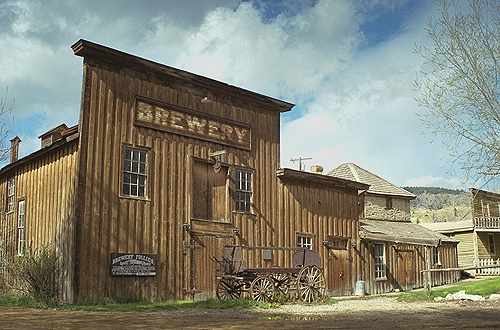 Of course what would a stop in Virginia City be without a stop at the brewery? And yes right next door is the opera house!!
In Old Town, we stopped off at Cousins Candy Shop The Virginia City shop has the original oak shelving and tin ceiling. Jars of the freshest candy are located in an old, covered chuck wagon pictured above. When we opened our shop in Old Town, we replicated the shelving and covered wagon exactly. Not only do we have great candy and a wonderful selection, Cousin's is just a fun place to visit with the entire family Of course the day wouldnt be complete without a stop at the Bale of Hay Saloon , an authentic wild west Saloon complete w/ Montana's best microbrews. Live music to to top off a great day

Abonați-vă la:
Postări (Atom)